What to Do When a Crown Falls Off
You're eating a normal meal when you feel something shift and come loose in your mouth. You reach in — and there it is. Your dental crown. The tooth underneath feels bare, strange, and sensitive. In the next few seconds, your mind races. Is this an emergency? What do you do? Can you wait?
At Tri-Town Family Dental, we serve families throughout Allenstown, Pembroke, Hooksett, Epsom, Bow, Concord, and across Merrimack County — and a lost or loose crown is one of the dental situations we handle most frequently. Here is your complete guide to what to do, step by step, from the moment it happens through your appointment with us.
Step One: Stay Calm, Find the Crown, Call Us
A dislodged crown is classified as a dental emergency, but it's not a medical emergency. Nothing catastrophic will happen in the next hour. What matters is acting thoughtfully and promptly — not panicking. Take a breath, then start by finding the crown. It may be in your mouth, in your food, or on your plate. Pick it up carefully and rinse it gently under warm water to remove any food particles. Don't use a brush, soap, or any type of cleaning product.
Once you have it, examine it. Look at it closely in good light: if the crown appears intact — no visible cracks, fractures, or significant chips — there's a strong chance your dentist can recement it rather than fabricate a new one. That's the best-case scenario, and it's a common one. Put the crown in a small bag or container and keep it safe to bring to your appointment. A crown that's lost or broken will need to be replaced from scratch, which takes longer and costs more.
Call our office as soon as possible. We do our best to see crown emergencies within 24 hours — often the same day. The exposed tooth is vulnerable, and the sooner we can protect it, the better. If you reach our voicemail, leave your name, phone number, and a note that your crown came off so we can prioritize your callback. Don't put it off thinking it will "probably be fine" — unprotected prepared teeth can fracture under normal biting pressure, especially if there's any underlying decay involved.

What to Do While You Wait
If you can get to a pharmacy before your appointment, pick up temporary dental cement. Products like Dentemp, Recapit, or TempBond are sold over the counter without a prescription at most drugstores — including CVS and Walgreens — and are specifically designed to temporarily reattach a crown when you can't get to your dentist immediately. Using one reduces sensitivity, protects the exposed tooth structure, and makes the hours before your appointment much more comfortable.
How to use it: start by making sure both the tooth and the inside of the crown are completely dry. Apply a small amount of the temporary cement inside the crown. Position the crown over the tooth carefully — it should feel like it's seating naturally — and bite down gently to press it into place. Wipe away any excess that squeezes out at the edges with a cotton swab or clean finger. Then don't touch it. The cement is temporary and not strong enough to handle normal biting forces, so eat only very soft foods — yogurt, eggs, mashed potatoes, soup — and chew on the opposite side of your mouth entirely until you've seen us.
For pain and sensitivity, over-the-counter ibuprofen or acetaminophen are appropriate. Clove oil — available in the oral care section of most pharmacies — can be dabbed onto the exposed tooth with a cotton swab for mild topical relief. The one thing you must not do: do not use super glue, nail glue, epoxy, or any non-dental adhesive to reattach the crown. These products chemically bond in ways that are extremely difficult to reverse, and they can permanently damage both the tooth and the crown — turning a simple fix into a complex and costly problem.
Why Did the Crown Come Off?
Crowns don't dislodge without reason. In most cases, it's one of three causes: cement failure, decay, or mechanical stress. Cement failure is the most common. Dental cement is durable but not immortal. Over years of exposure to the forces of chewing, the acids in food and saliva, and the constant expansion and contraction from temperature changes in the mouth, the bond gradually degrades. A crown that has been in place for ten or more years is a prime candidate for cement failure — the bond has simply aged past its reliable lifespan.
Decay beneath the crown is a close second — and it frequently surprises patients. Many people assume that a crowned tooth is immune to decay. It isn't. Bacteria can infiltrate the very edge where the crown margin meets the tooth, and if decay develops in the tooth structure underneath, it erodes the foundation the crown is bonded to. The crown eventually loosens as that foundation disappears. This is exactly why we take X-rays of crowned teeth at regular checkups — decay under a crown almost never causes symptoms until it's quite advanced, but X-rays pick it up far earlier.
Mechanical stress — from grinding or clenching teeth at night (bruxism), biting ice or hard candy, chewing on pens, or opening packaging with your teeth — is the third common cause. These habits subject crowns to forces they weren't designed to withstand repeatedly, and they accelerate fatigue in the cement bond over time. If grinding is a pattern, a custom-fitted night guard can significantly protect your crowns and other restorations and extend their useful life.
What Your Appointment Will Look Like
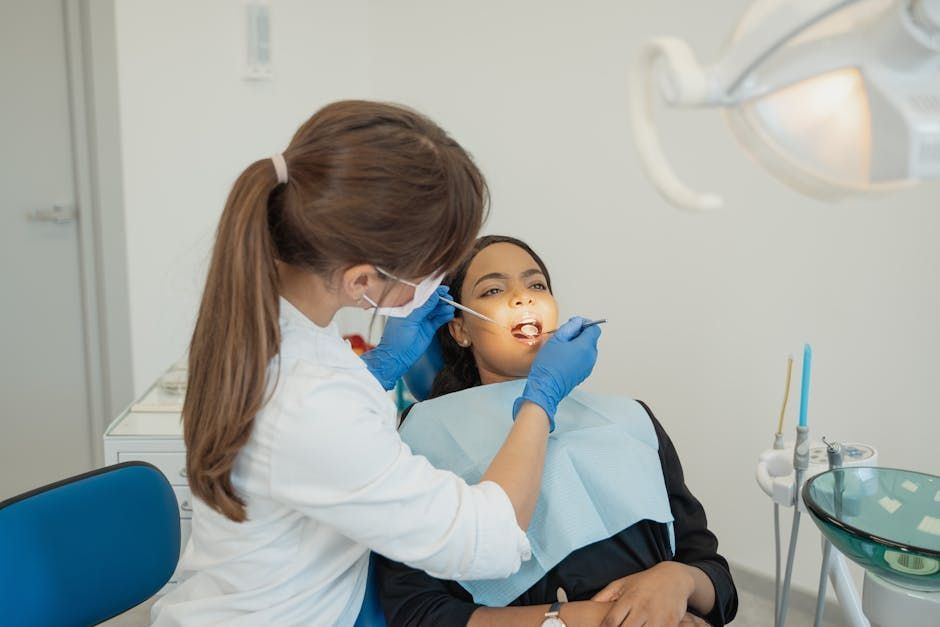
When you come in with a dislodged crown, we begin with a careful evaluation of both the crown and the tooth it came from. We want to know: is the crown structurally intact and can it be recemented, or has it been damaged and needs replacement? And for the tooth: is there new decay at the margin, any fracture of the tooth structure, or other issues that need to be addressed before or alongside placing the crown back?
If the crown is in good shape and the tooth is healthy, recementation is typically a quick, single-visit procedure. We thoroughly clean and dry both the tooth and the interior of the crown, apply fresh permanent dental cement, seat the crown, check your bite, and make any fine adjustments needed. We'll give you post-placement instructions — specific food and activity guidelines for the first 24 hours — and you'll leave with your tooth protected again. If the crown needs replacement, or if there's decay or damage to address first, we'll discuss the path forward clearly and place a temporary crown to protect the tooth while the new permanent crown is being fabricated in a dental lab, usually within one to two weeks.
Tri-Town Family Dental
A crown coming off is never convenient — but it's nearly always fixable, often in a single appointment. The most important thing is not to wait. The exposed tooth needs protection, and early action keeps the solution simple. We serve patients throughout Allenstown, Pembroke, Hooksett, Epsom, Deerfield, Candia, Bow, Concord, and across Merrimack County.
Crown came off? Don't wait it out. Contact Tri-Town Family Dental today for a prompt appointment. Call us at (603) 485-8464 or visit us at 50 Pinewood Road, Unit 5, Allenstown, NH 03275.